Skip to content


Wooden flooring is a timeless and elegant choice that adds warmth and character to any home. Whether it’s the rustic charm of oak or the sleek sophistication of walnut, wooden floors can enhance the aesthetic appeal of a space. However, like any natural material, wood is subject to wear and tear over time. Scratches, dents, warping, and discoloration can affect both the appearance and functionality of your floors. If you’re dealing with damaged wooden floors, you might be wondering what the best approach is to restore them. In this blog, we’ll discuss common wooden flooring repairs, the issues that you may need to use them for, and tips for maintaining your floors in the long run.
Common Types of Wooden Flooring Damage
Before diving into repair methods, it’s essential to understand the types of damage that can occur with wooden floors:
- Scratches and Scuffs
- Everyday foot traffic, moving furniture, or pet claws can cause scratches and scuffs. While superficial scratches are purely cosmetic, deeper scratches can expose the wood to further damage.
- Dents and Gouges
- Dropping heavy objects or dragging furniture can leave dents and gouges in wooden floors. These types of damage are more challenging to fix as they affect the structure of the wood.
- Water Damage
- Spills, leaks, or humidity can lead to water damage. Wood absorbs moisture, which can cause it to swell, warp, or discolor. Prolonged exposure to water can even lead to mold growth or structural issues.
- Stains and Discoloration
- Over time, wooden floors can lose their original luster and develop stains from spills, UV exposure, or high traffic areas. These stains can be difficult to remove and may require sanding or refinishing.
- Gaps Between Boards
- Wood naturally expands and contracts with changes in temperature and humidity. This can cause gaps to form between floorboards, leading to an uneven surface or drafts.
- Squeaky Floors
- As wooden floors age, they may start to creak or squeak due to loosened floorboards or nails. While not damaging in itself, squeaky floors can be annoying and indicate the need for minor repairs.
Wooden Flooring Repair Methods
Depending on the type and severity of damage, there are several approaches you can take to repair wooden floors. Below are some common repair methods:
Sanding and Refinishing
For floors that are scratched, stained, or have lost their finish, sanding and refinishing is an excellent option. This process involves sanding down the top layer of the wood to remove imperfections, followed by the application of a new stain or finish.
- Steps Involved:
- Sand the floor using a floor sander or hand sander for smaller areas. Begin with a coarse grit and gradually move to finer grits.
- Once the floor is smooth, vacuum up any dust and debris.
- Apply a stain or finish of your choice to restore the floor’s color and protection.
- Allow the finish to dry before applying additional coats as needed.
- When to Use: Sanding and refinishing are ideal for removing surface-level scratches, stains, and dullness. It’s also a great way to refresh the look of your floors if they’ve faded over time.
Filling Dents and Gouges
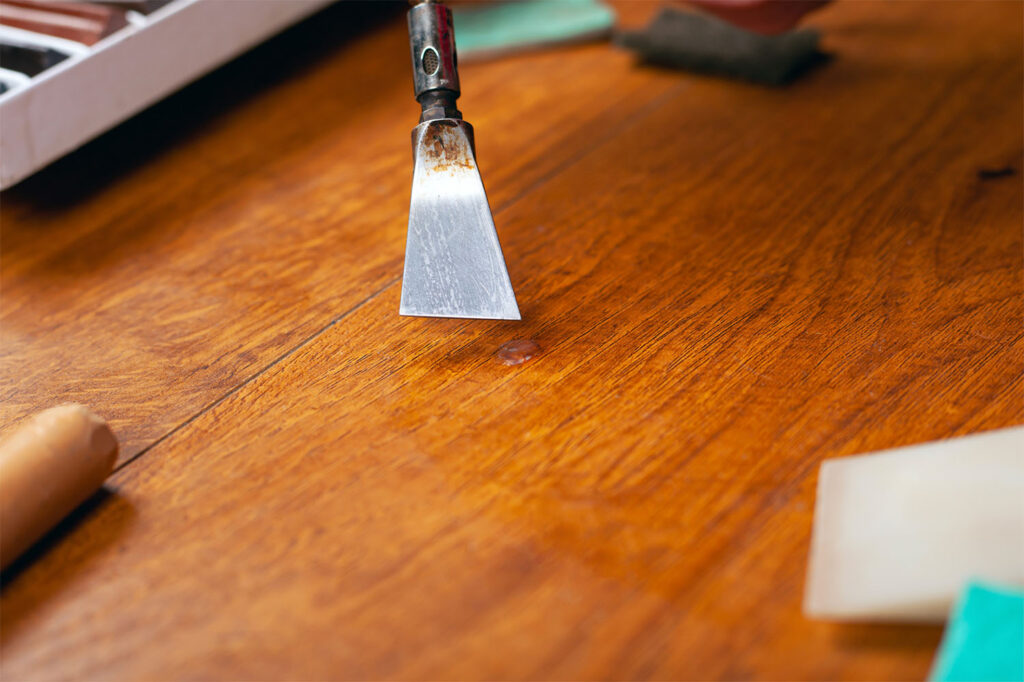
For small dents and gouges, wood filler or putty can be used to repair the damage. This method works best for isolated areas of damage.
- Steps Involved:
- Clean the area around the dent or gouge, removing any debris or loose wood.
- Apply wood filler or putty to the damaged area, smoothing it out with a putty knife.
- Once the filler has dried, sand the area lightly to ensure it’s flush with the rest of the floor.
- Stain or refinish the repaired area to match the surrounding floor.
- When to Use: This method is suitable for small to medium-sized dents or gouges that haven’t compromised the structural integrity of the floor.
Replacing Damaged Boards
In cases of severe damage—such as water damage, deep gouges, or warping—it may be necessary to replace individual boards.
- Steps Involved:
- Carefully remove the damaged board by cutting it out or prying it up.
- Fit a replacement board of the same wood type and size into the gap.
- Secure the new board with nails or adhesive, making sure it aligns with the surrounding boards.
- Sand and refinish the new board to blend it with the rest of the floor.
- When to Use: Replacing boards is ideal for isolated cases of severe damage. It’s a more time-intensive process but ensures that the structural integrity of your floor is maintained.
Repairing Gaps Between Floorboards
Gaps between floorboards can occur due to changes in temperature and humidity, causing the wood to expand and contract. To fix these gaps, you can fill them with wood filler, rope, or wood slivers.
- Steps Involved:
- Clean the gap of any debris or dust.
- Fill the gap with a wood filler or a flexible gap-filling material, such as jute rope.
- Sand down any excess filler to create a smooth surface.
- Refinish the area to match the surrounding wood.
- When to Use: This method is suitable for minor to moderate gaps. However, if the gaps are large or recurring, it may be worth consulting a professional to address underlying structural issues.
Fixing Squeaky Floors
Squeaky floors are often caused by loose boards or nails. To fix this, you can secure the boards using screws or nails, or lubricate the areas where wood is rubbing together.
- Steps Involved:
- Identify the source of the squeak by walking across the floor and listening for the noise.
- If it’s a loose board, secure it with a nail or screw.
- Apply talcum powder or a lubricant like WD-40 to the joints where the squeaking occurs.
- If necessary, add additional screws or nails to secure the floor more tightly.
- When to Use: This method works best for minor squeaks that are caused by loose boards or nails.
Preventing Future Damage
After repairing your wooden floors, it’s important to take steps to prevent future damage. Here are some tips for maintaining your floors and keeping them in great condition:
- Regular Cleaning: Sweep or vacuum regularly to remove dirt and debris that can scratch the floor. Use a damp mop occasionally but avoid excessive moisture, which can damage the wood.
- Use Furniture Pads: Place felt pads under furniture legs to prevent scratches when moving items around.
- Control Humidity Levels: Use a humidifier in dry seasons and a dehumidifier in humid seasons to maintain a stable moisture level in your home. This helps prevent wood from expanding or contracting.
- Wipe Spills Immediately: Clean up any spills as soon as they occur to prevent water from seeping into the wood and causing damage.
- Avoid Harsh Chemicals: When cleaning wooden floors, avoid using harsh chemicals or abrasive cleaners. Instead, use products specifically designed for hardwood floors.
Conclusion
Wooden floors are an investment that can last for decades with proper care and maintenance. Whether you’re dealing with minor scratches, gaps, or more severe damage, there are repair methods available to restore the beauty and functionality of your floors. For extensive repairs or complex issues like water damage or warping, it may be worth consulting a professional flooring specialist.
By regularly maintaining your wooden floors and addressing damage early on, you can keep your floors looking stunning and ensure they continue to enhance your home for years to come.